The PACS instrument
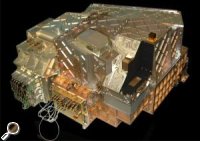
| |
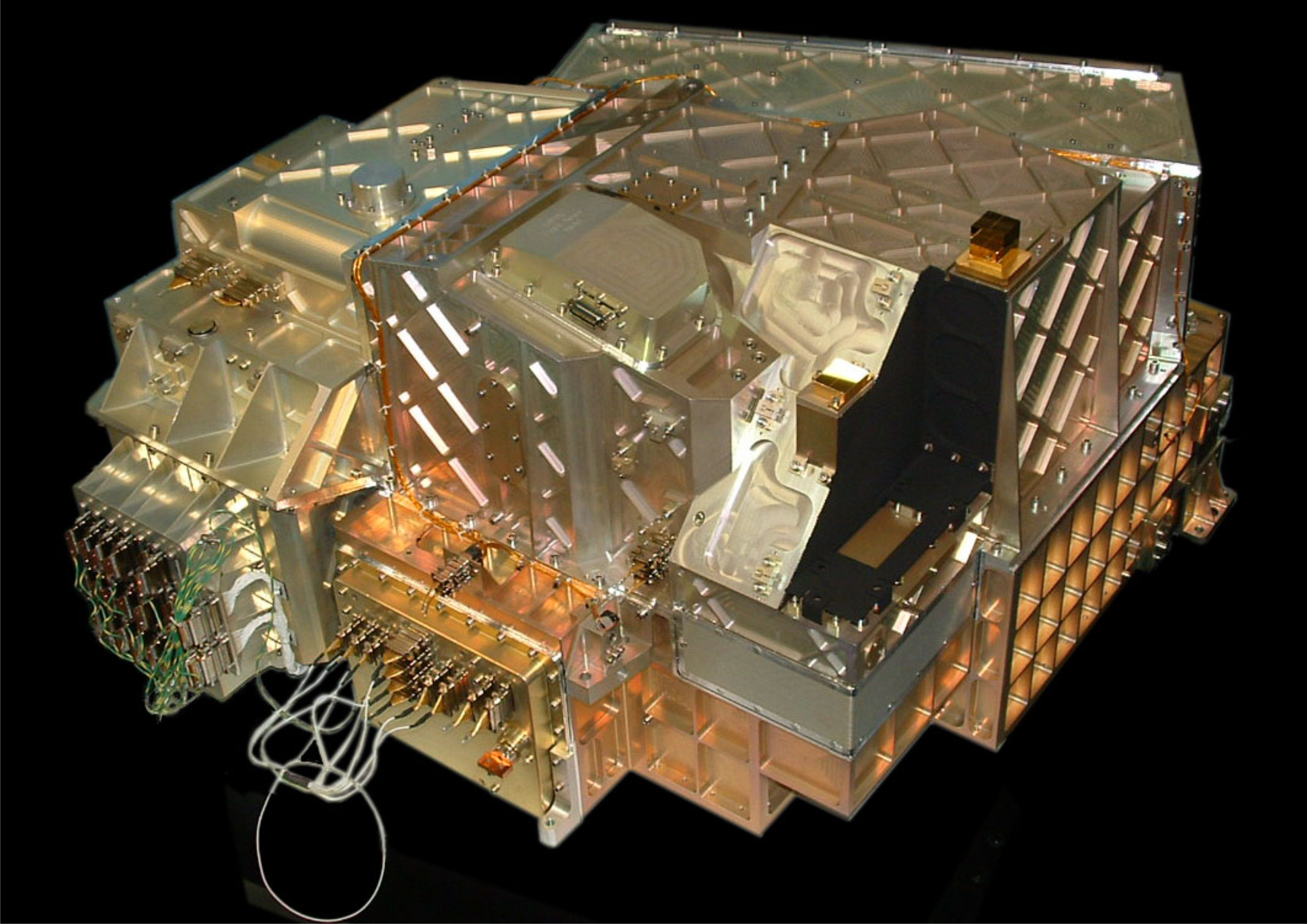
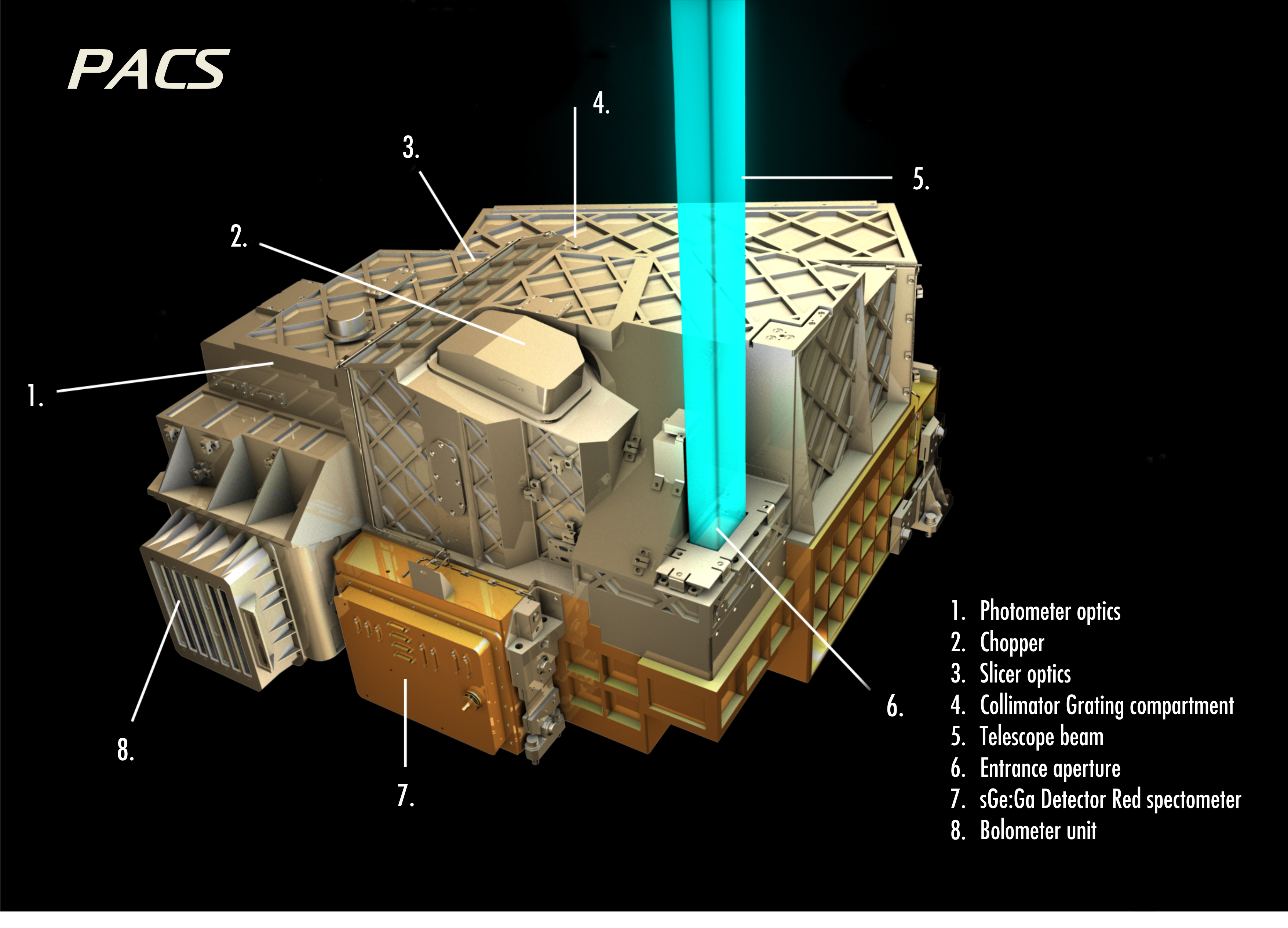
Fig.1: PACS (Image: ESA) (Click on image to enlarge)
|
|
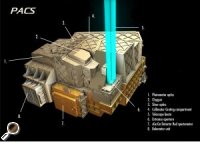
| |
Fig.2: Artist’s impression of the PACS instrument (Image: ESA) (Click on image to enlarge)
|
|
The Photoconducting Array Camera and Spectrometer PACS provides HERSCHEL with
far-infrared imaging and spectroscopic capabilities from 60 to 210 μm.
It hosts four detector arrays consisting of two bolometer arrays and two Ge:Ga
photo-conductor arrays. The bolometer arrays are dedicated for imaging and
photometry, while the photo-conductor arrays are used for pointed and integral
field spectroscopy leading to images at individual wavelengths or selected
ranges of the spectral bands. The MPIA is the largest co-investigator
institute participating in the PACS instrument which was developed jointly by
eleven European institutes under the leadership of the Max Planck Institute
for Extraterrestrial Physics (MPE) in Garching, Germany. PACS turned out
to be the instrument most strongly requested by scientists and has a share of
HERSCHEL operations of more than 50%.
PACS Chopper
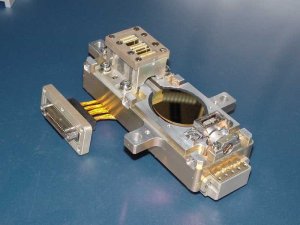
| |
Fig.3: Flight model of the PACS focal
plane chopper. The gold-plated mirror has a major axis length of
32 mm. On the lower right side, one of the suspensions in a Cu:Be
flexural pivot are visible; the three motor coils located to the left
are made of 10 μm high-purity Al wires.
|
In order to precisely measure the weak signal of a cosmic source against the
large thermal background signal of the 80-90 K "warm" HERSCHEL
telescope, PACS is operated with a focal plane chopper. This device (see Fig.
3) is a 32 x 26 mm2 "tipping"
("chopping") mirror comparing two neighbouring sections of the sky
by using a square-wave modulation with frequencies of up to 1.25 Hz. By
subtracting the background radiation identical in both fields, the brightness
of the cosmic source can be extracted. The chopper has also been proven to be
useful to identify long term thermal and instrumental trends. It is one of
MPIA’s important contributions to PACS. After a successful prototyping
phase at the institute, the company
Carl Zeiss in Oberkochen, Germany, has been selected as
the industrial contractor for building the flight models of the chopper. To
prove the demanding specifications, several models of the chopper had to be
manufactured: A lifetime model successfully passed 650 million chopper
movements at an operating temperature of −270°C. Additional flight
spare models were built to substitute flight models in the case of damage or
other problems with the flight model. They are now being used as a laboratory
twin of the flight model in order to verify and test its behaviour in space.
Ge:Ga detectors
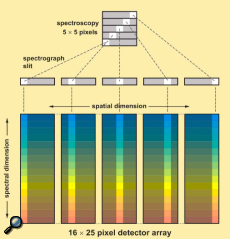
| |
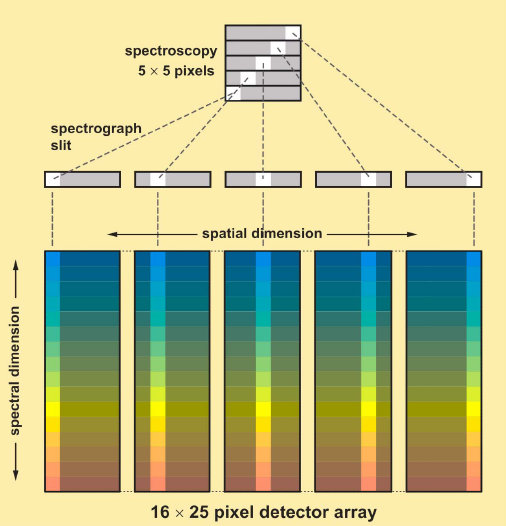
Fig.4: Schematic view of the integral field spectroscopy method. The 5 x 5 pixel field is transformed into a row of 25 pixels that are dispersed along the 16 x 25 pixels of the photo-conductor array. (Click on image to enlarge)
|
|
| |
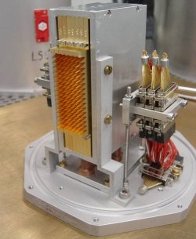
Fig.5: Seven detector rows with 16 pixels each of a camera for the PACS spectrometer unit. The light funnels in front of the Ge:Ga pixels are visible.
|
|
MPIA is also responsible for the characterisation of the PACS far-infrared low
stressed Gallium doped Germanium (Ge:Ga) detectors as used in the integral
field spectrometer of the PACS instrument (Fig. 5). The observed field of
5 x 5 spatial pixels is converted into a single row of 25
signals by an image slicer and is then dispersed via a grating. The resulting
spectra are analysed by the 16 x 25 pixel Ge:Ga
photo-conductors with the rows of 25 elements representing the spatial
information and the 16 columns containing the dispersed spectra. Two
wavelength ranges can be observed simultaneously (called blue and red covering
55-105 μm and 105-210 μm, respectively).
Pre-flight Test Support
| |
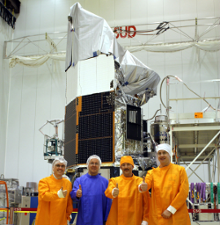
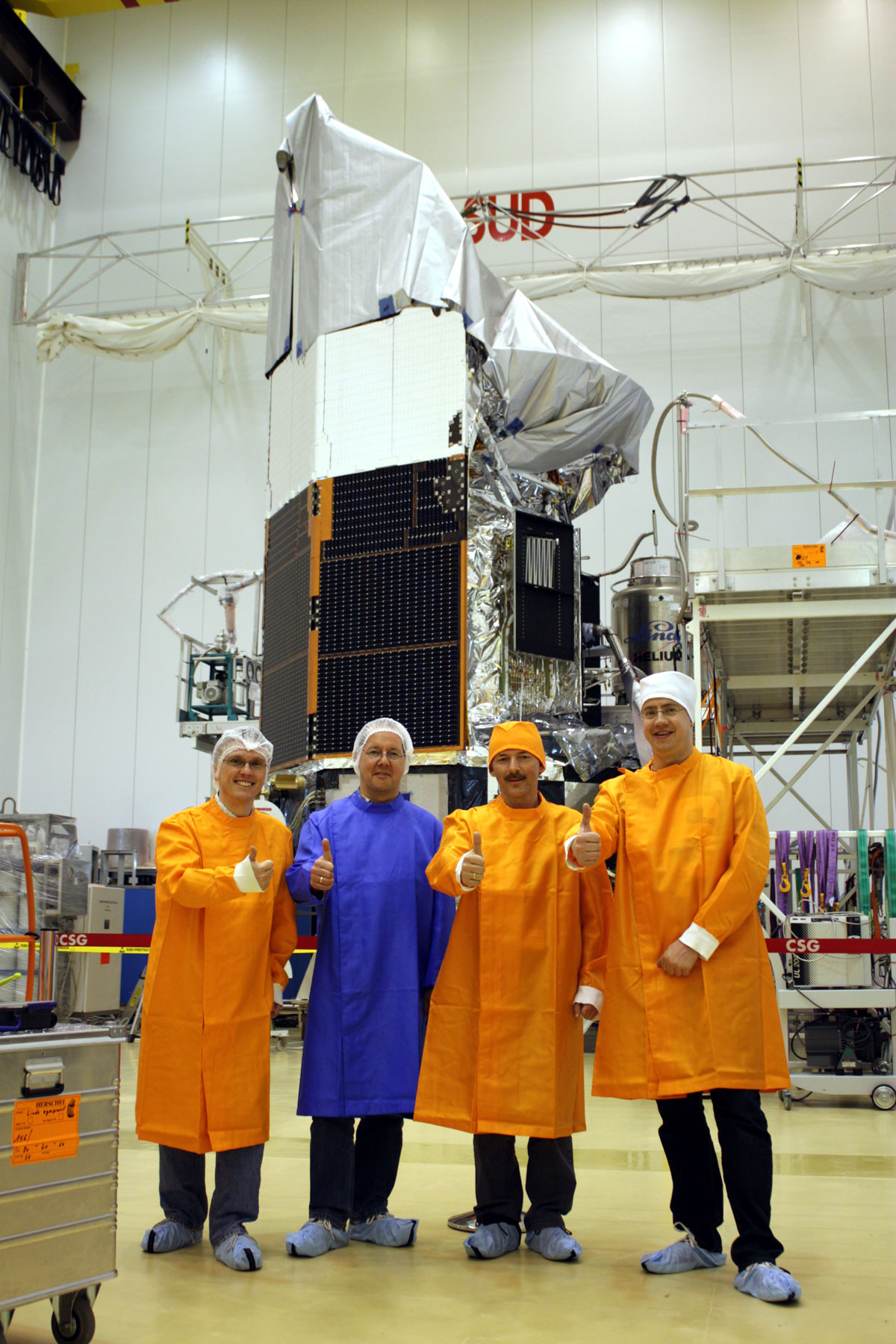
Fig.6: The HERSCHEL satellite in the cleanroom of the test facility S1B of Europe's space port in Kourou, French Guiana. In front of the satellite, the PACS test team gives green light for launch after a last successful functional test of the instrument. (Click on image to enlarge)
|
After the work for the instrument was completed at MPIA, a phase of intense
testing followed and extended until the launch of the telescope. Scientists
from Heidelberg were heavily involved in the cold and warm tests of the PACS
flight model at MPE in Garching. Upon integration of the HERSCHEL
3.5m mirror onto the cryostat assembly and the cool-down of the instruments to
liquid helium temperature at the European Space Agency (ESA) technology centre
ESTEC in Noordwijk (NL), a series of tests of all
instrument components and software systems was conducted including an
end-to-end test simulating the observatory operations with the satellite in
the Large Space Simulator Chamber. The instrument had to survive 15 cold-warm
cycles (−270°C → +300°C → −270°C). These
tests comprised a large number of short functional tests before and after
shaking the whole satellite and simulating an Ariane 5 rocket launch that
exerts acceleration loads of up to 30 times the Earth’s gravity. A final
set of functional tests were executed just before the launch after the
transport of the HERSCHEL satellite to the Kourou spaceport in French Guiana.
Instrument Control Centre
After successful delivery and check-out of the PACS hardware contributions,
MPIA is now heavily involved in many PACS Instrument Control Center tasks. The
Instrument Control Centre (ICC), located at the PI institute MPE in Garching,
has the responsibility for operations, calibration and data quality of the
PACS instrument. MPIA is one of four institutes of the PACS consortium which
are main manpower contributors to the PACS ICC. MPIA coordinates the
calibration of the PACS instrument and has been responsible for establishing
the PACS Performance Verification Phase plan, the central PACS calibration
document and the PACS Routine Science Phase calibration. The MPIA is also
reponsible for the revision and approval of HERSCHEL operational days that
contain PACS calibration or engineering observations.
| |
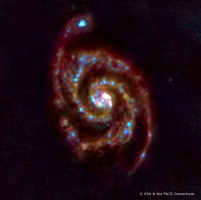
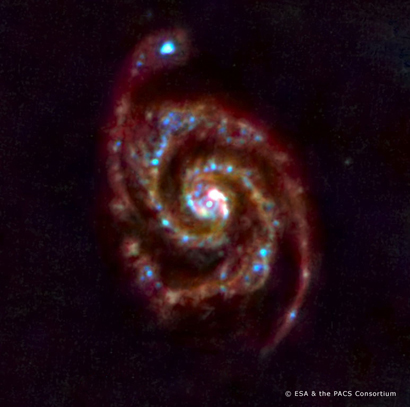
Fig.7: Image of M51 obtained as the first scientific HERSCHEL image during the so called Sneak Preview, immediately after cryo cover opening, on HERSCHEL's 32nd operational day. This composite image has been created from images in the three PACS bands at 70, 100, and 160 μm. (Click on image to enlarge)
|
During the two months lasting Commissioning Phase the coordination of all PACS
instrument activities and their mission planning was executed by the MPIA
team. It also ensured the optimum in-flight set-up of the Ge:Ga spectrometer
detector arrays following a procedure developed in the MPIA lab. All 64
operational days of the PACS instrument and HERSCHEL telescope pointing
performance verification, lasting from mid July until end of November, were
coordinated and scheduled by the MPIA ICC team, which also maintained the
overall PV Plan. This also included the planning for the first light images of
HERSCHEL. The PV activity
established an initial calibration in space and verified the validity of
astronomical observation templates (AOTs), which are the basic observing
blocks to be used by all observers later. Setting up the PV plan was a complex
and challenging task since a large number of boundary conditions, such as
source visibilities and properties as well as interdependencies of
observations, had to be accounted for in the mission planning. The MPIA team
has exclusively carried out the detailed mission planning of all PACS PV phase
operational days, utilising dedicated software tools, and has delivered the
observational data bases to the HERSCHEL Science Center at ESAC in Villafranca
(Spain) and the Mission Operations Center at ESOC in Darmstadt (Germany).
The principles of planning and executing calibration observations still hold
during the Routine Science Phase (RSP), although only a few hours during an
observing cycle of 14 days are reserved for PACS calibration.
By the end of 2009, the PACS spectrometer pipeline, which had been built
with significant contributions and under the coordination of MPIA, had already
reached the maturity to populate the HERSCHEL archive with science products.
Currently, the MPIA is taking a lead role in optimising the calibration and
data quality that is affected by pointing inaccuracies.
The photometric calibration of the PACS photometer is another important task
in which the MPIA plays a key role. Together with colleagues of the MPE, the
accuracy of point sources measured with the PACS photometer has already been
pushed beyond the initial expectations. The remaining uncertainties are
dominated by the models of the standard sources, which are accurate to 5%. By
analysing calibration data that were obtained throughout the entire HERSCHEL
mission, and in which the PACS chopper is a crucial tool, the prospects are
that by calibrating out thermal effects of the telescope mirror and the
bolometer cooler, the relative point source calibration accuracy will be of
the order of 0.5%.
| 

 click here to get a printer-friendly version of this page